| Breakout Sessions |
| |
Delegates select one breakout session to attend |
|
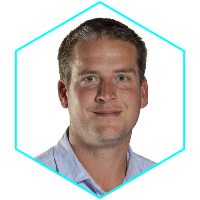
David Haddad
|
Manual Therapy for different Musculoskeletal & Neurological Conditions
David will be presenting and demonstrating different massage/myotherapy techniques that can help manage different type of headaches, spasticity/tone, rigidity and clonus. These symptoms coincide with their relevant conditions; headaches, Cerebral Palsy, Multiple Sclerosis and Dementia that have been previously presented on and now David will teach you how to apply the evidence to help treat patients living with these conditions.
|
|
|
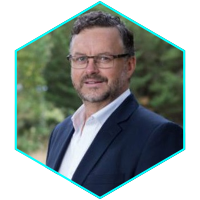
Grant McKechnie
|
Complex Regional Pain Syndrome (CRPS): Understanding through to Recovery: What role you play!
Complex Regional Pain Syndrome (CRPS) is one of the most challenging pain conditions encountered in clinical practice, often misunderstood, mislabelled, and mismanaged. Massage therapists frequently see clients with CRPS or CRPS-like presentations, yet may feel uncertain about what's happening, what helps, and what their role should be. This 60-minute presentation provides a clear, contemporary overview of CRPS, grounded in current pain science and international clinical guidelines. The session will cover:
- How CRPS develops – key pathophysiological mechanisms including peripheral and central sensitisation, neuroimmune changes, autonomic involvement, and altered body representation
- Clinical identification – recognising CRPS features and red flags, and understanding diagnostic frameworks (e.g. Budapest Criteria) without over-medicalising
- Current guidelines and best-practice care – what the evidence says about multidisciplinary management and where massage therapy fits safely and effectively
- Treatment and rehabilitation principles – including education, graded exposure, pacing, and examples such as Graded Motor Imagery (GMI), mirror therapy, and sensory retraining
- Practical application for massage therapists – adapting touch, communication, consent, and expectations to support safety, regulation, and confidence rather than flare-ups
- Presenter bio
|
|
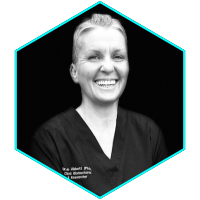
Dr Jo Abbott |
Clinical Touch: The Art and Science of Active Touch - human perception, measurement, and what the evidence missed
Touch is the first sense to develop and the last to be lost. It is also the only measurement instrument in musculoskeletal healthcare that has never been formally characterised. This practical day examines the clinician as the instrument. Working in pairs throughout, delegates score their own tactile discrimination against a known answer, then watch what happens to it as conditions change: cold hands, altered position, restricted fingertips, and expectation. Every interference is reversed, so that what falls is also restored. The point is not that touch is unreliable. It is that human perception is conditional, and the conditions belong to the clinician. Between the practical blocks, the day traces where the evidence went wrong. Why seventy years of reliability research asked whether hands agreed without first asking whether the instrument had been stabilised. Why the literature on touch so rarely says whose touch it means. And what a recent international expert panel concedes is still unmeasured. In a conference on neurological conditions, the nervous system under examination here is the clinician's own. No technique is taught, and no claim is made that the day improves anyone's reliability. It is about knowing what your instrument does, and under what conditions. Learning outcomes on completing this workshop, delegates will be able to:
- Distinguish active touch from passive touch, and identify which of the two clinical assessment depends upon.
- Describe the mechanisms that generate tactile information during active touch, and why a stationary finger produces none.
- Identify and demonstrate factors that measurably alter their own tactile discrimination, and the restoration of it.
- Explain why reliability studies of hands-on assessment have produced the findings they have, and what would need to change.
|
|
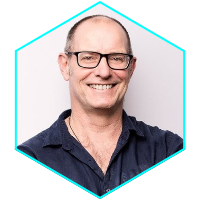
Phil Ladlow |
Neurological assessment - signs, symptoms, treatment modification and targeted interventions
DESCRIPTION TO COME.
|
| Theory Sessions |
| |
All delegates attend these sessions |
|
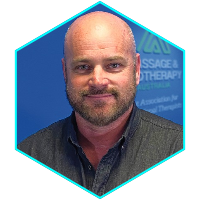
Garry Lavis
|
Improving Mobility & Quality of Life: Remedial Massage for Parkinson's Disease
Drawing on over 25 years of clinical experience, Remedial Massage Therapist/Myotherapist Garry Lavis explores the vital role of targeted, personalised bodywork in managing the symptoms of Parkinson's disease. In this session, Garry shares practical insights from his clinical work—demonstrating how massage therapy can alleviate muscle rigidity, improve range of motion, and work alongside medication timing and allied health care to support client well-being. Attendees will also gain an overview of the core pillars behind the specialised Parkinson's massage protocol Garry is currently developing. Covering physical safety for clients experiencing severe tremors, compassionate communication, and multidisciplinary collaboration.
|
|
|

Victor McConvey
|
Unmasking Parkinson's - common symptoms of facial masking / or loss of facial expression that many people living with Parkinson's experience
The key learning objectives will be:
- Develop understanding of incidence, diagnosis, and underlying pathology of Parkinson's
- Increase knowledge of the motor, non-motor and mixed motor and non-motor symptoms and the impact on the individual
- Gain knowledge of the treatments and models of care for people living with Parkinson's
- Increase awareness of how Massage and Myotherapy can support a person living with Parkinson's
|
| Plenary Sessions |
|

Richard Hill
|
Brain Matter: From Neurons to Networks to What Matters
What happens in a single neuron is extraordinary, but neurons rarely act alone. They wire together; they group together; groups network; and networks network. When there are around 84 billion in the population and each of these neurons can connect thousands of times and those connected groups can interconnect in thousands of ways, you end up with something very complex – and incredibly fascinating. We are still learning about the brain and how it operates on the whole-body level and definitely have a long way to go. But we need to start exploring somewhere. This presentation will look at how the brain becomes such an extraordinary organising and regulating organ. We will peek into the neuron and look at some of the wonders at the microscopic level, then pan out to the structural frameworks, then to the organising networks and see how what is encased in the skull communicates with the body below and vice versa. This presentation looks to complement and where possible enhance the range of information offered through the conference. What matters? The matter matters.
|
|
|
Phil Ladlow
|
Neuroplasticity - current scientific frameworks, evidence and practical applications in therapeutic massage
DESCRIPTION TO COME
|
| Pre-Conference Workshops |
| |
Optional paid full-day workshops that take place Friday 4 June 2027 |
|
Dr Jo Abbott
|
Fit to Touch
Your own state, measured, and what to do about it before you touch anyone
You check the couch, the oil, the notes and the room before every client. Almost nobody checks themselves. Yet cold hands, tiredness, posture, a distracted mind or a heavy morning all change what your hands pick up, and most therapists have never seen by how much. You'll take a baseline of your own active touch, scored against a known answer, then see what happens to it as temperature, fatigue, position and attention change, and what brings it back. You'll leave with your own numbers, a clearer sense of what moves them, and a short settle-and-reset routine of your own to use before clinical work.
|
|

Julie Hammond |
Introduction to the Pelvic Diaphragm: treating pelvic pain and dysfunction through a global lens
Based on Julie Hammond's book, The Pelvic Diaphragm: Treating Pain and Dysfunction from a Global Anatomical Perspective, this one-day workshop introduces practitioners to a different way of understanding and working with the pelvis. A pelvis problem is never just a pelvis problem. The pelvic diaphragm does not function in isolation. Its relationship with the respiratory diaphragm, feet and the rest of the body plays an important role in how we understand pelvic pain and dysfunction. Throughout this workshop, we will explore the intricate and often misunderstood anatomy of the pelvic diaphragm, with particular emphasis on its fascial and functional connections to the rest of the body. We will also examine pelvic neuralgias and introduce practical, external manual techniques for working with pelvic pain and dysfunction. The aim is to inspire and excite practitioners by making complex anatomy relatable and clinically relevant. Contemporary anatomical concepts, supported by current research, will encourage participants to think beyond local symptoms and consider the pelvis within a broader, whole-body context. Combining theory, experiential learning and hands-on techniques, this workshop will provide practitioners with a deeper understanding of pelvic anatomy and practical approaches they can integrate into clinical practice. Designed specifically for massage therapists, all pelvic techniques are external, non-invasive and taught within the scope of practice. Come with curiosity and leave with a different perspective on the pelvis.
|